Showing posts with label Festival of Bihar. Show all posts

Friday, 29 April 2016

Y for Yamdwitiya


Bhai Dooj


Yama Dwitiya is observed on the second day of the waxing phase of moon (Shukla Paksha) in Kartik month and is one of the last celebrations during Diwali. It falls after two days of Diwali. Yama Dwitiya is also known as Bhai Dhooj or Bhav Bij or Bhai Beej and Bhai Teeka, Godhan. Yam Dvitiya is associated with Lord Yama, the Hindu god of Death, visiting his sister Yami and is thus a symbol of love between brothers and sisters.

Mythological Reference

Legend has it that Lord Yama, the Hindu God of Death, visited his sister, Yami, on the first day of the Shukla Paksha in Kartik month after Diwali. Yami welcomed her brother with garlands and by applying the auspicious tilak or Tika on his forehead. Then the brother and sister exchanged gifts. Yami also served Yamraj his favorite dishes. Yamraj who was overwhelmed by the love of his sister is believed to have said to Yami that who receives Tilak or Tika from his sister will have to never suffer hell. Since then Yama Dwitiya is observed as a symbol of love between brothers and sisters.

Mythology also believes, after slaying the evil demon Narkasur, Lord Krishna visited his sister Subhadra who gave him a warm welcome with sweets and flowers. She also affectionately applied tilak on Krishna's forehead and thus the origin of the festival.

Celebration

The celebrations of this day are similar to the festival of Raksha Bandhan (another festival of Hindu as a symbol of love between brother and sister where by the sister ties Rakhi on the wrist of brother and the brother vows to protect sister lifelong). 

Rakshabandhan

Differentiation in Rakshabandhan and Bhai Dooj is that in the former Sister ties as special thread on wroist of brother called Rakhi, while in Bhai Dooj, sisters pray for a long and happy life for their brothers, by performing the Tika ceremony.

Sister performing Tika on Bhai Dooj


On the day of the festival, ladies / girls and all sisters do a collective tika puja of Yamdivitiya and the sweets & dry fruits used in this puja is used as prasad for their brothers along with other sweets. The sisters invite their brothers for a sumptuous meal often including their favourite dishes/sweets. The whole ceremony signifies the duty of a brother to protect his sister, as well as a sister's blessings for her brother. In return brothers bless their sisters and treat them also with gifts or cash. Bhai Dooj is a time for family reunions as all brothers and sisters in the family get together. Close relatives and friends are also invited to celebrate the Bhai Dooj in many families.

Godhan (Bhai Dooj) as called in Bihar where ladies performing Tika puja collectively.

The Kayastha Community also celebrates Chitragupta Puja or Dawat  Puja on this day. And it is believed that performing Choitragupta Puja in married sister’s house brings prosperity. The puja involves worship of Chitragupta bhagwan and pen, pencils, inkpots etc. used for studies. It gains its name Dawat (Inkpot) puja from the same.

Important items associated with Chitragupta in his puja include the paper and pen, ink, along with other puja items The puja is often performed to Chitragupta in reverence of the four virtues he is seen to embody: justice, peace, literacy, and knowledge. Part of the Chitragupta puja also includes writing down how much money you make in your household, and how much you need to make to survive in the following year, while making offerings of turmeric, flowers, and vermilion

People performing Chitragupta Puja

Mythology Reference of Chitragupta Puja

The birthday of Chitragupta is celebrated on Yama Dwitiya and Chitragupta Jayanti Puja is performed on this day.

Chitragupta is a Hindu God assigned with the task of keeping complete records of actions of human beings on the earth. Upon their death, Chitragupta has the task of deciding heaven or the hell for the humans, depending on their actions on the earth. Chitragupta Maharaj (Chitragupta the King) is the patron deity of Kayasthas, a Hindu sect of India and Nepal. He is the son of Lord Brahma and holds a fairly special place in the Hindu pantheon because of the order of his birth.


Chitragupta & His sons - The Kayastha Family
Lord Brahma had many various sons and daughters in various myth structures, including many seers born of his mind, such as Vashishta, Narada, and Atri, and many sons born of his body, such as Dharma, Delusion, Lust, Death, and Bharata. The story of the birth of Chitragupta is related in different ways, but he is nearly always delineated differently from the other children of Lord Brahma, and a common thread is that he is born directly of Lord Brahma’s body.

In one popular version of the creation myth of Chitragupta, it is said that Lord Brahma gave the land of the dead over to the god Yama, also known as Dharamraj or Yamraj. Yama would become confused sometimes when dead souls would come to him, and would occasionally send the wrong souls to either heaven or hell. Lord Brahma commanded him to keep better track of everyone, and Yama declared that he could not reasonably be expected to keep track of the many people born of the eighty-four different life forms in the three worlds.

Lord Brahma, determined to solve this problem for Yama, sat in meditation for many thousands of years. Finally he opened his eyes, and a man stood before him with a pen and paper. As Chitragupta was born of Lord Brahma’s body, or kaya in Sanskrit, Brahma declared that his children would forever be known as Kayasthas. As he was first conceived in Brahma’s mind, or chitra, and then made whole in secrecy, or gupta, away from the other gods, he was named Chitragupta.

Chitragupta is sometimes also referred to as the first man to use letters, and is hailed that way in the Garud Puran. He is known as being incredibly meticulous, and with his pen and paper he tracks every action of every sentient life form, building up a record of them over the course of their life so that when they die the fate of their soul can be easily determined. These perfect and complete documents are referred to in mystical traditions as the Akashic records, and as they contain the actions of each person from birth to death, they can be said to contain every action taken in the universe.

Aditya Sinha
29.04.2016

For my parallel second Challenge blog with A pls visit : Let the Soul Pour

For other A to Z challenge blogs visit : A to Z Challenge 2016

Tuesday, 26 April 2016

V for Vijayadashmi

Goddess Durga killing Mahisasura Idol on Dussehra


Vijayadashami also known as Dussehra, Durga Puja or Ayudha puja, is one of the most important Hindu festivals. The festival celebrates victory of good over evil. It is celebrated in various forms, across India, Nepal, Sri Lanka, and Bangladesh as well as parts of Pakistan. The name Dussehra being derived from Sanskrit - Dasha-hara literally means Dashanan ravan (short name of Ravan as dasha) and Hara meaning defeat i.e  Lord Rama's victory over the ten-headed demon king, Ravana. Vijayadashmi – Vijaya means victory and dashmi denotes the 10th day of the lunar calender on which the day falls. This thus also marks the victory of Goddess Durga over the demon Mahishasura. The Goddess fought with evils for nine nights and nine days.


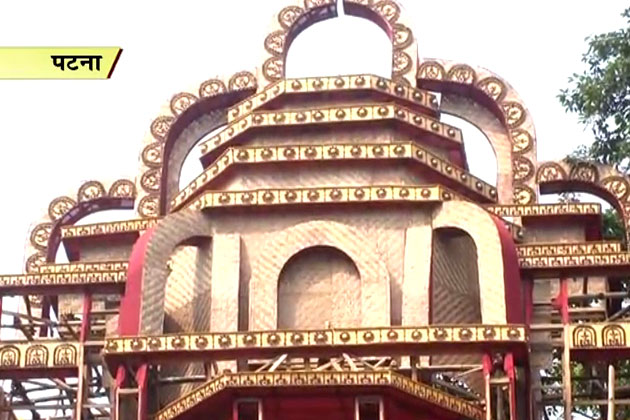
Make Shift Pandal for Durga Puja
 

Diwali/Deepawali, the Festival of Lights, is celebrated twenty days after Dussehra and nine days prior to prior to Dussehra is the nine day prayer of Goddess Durga called Navratri.

Significance & Mythological Reference:

Vijayadashami is celebrated on the tenth day of the month of Ashwin according to the Hindu lunisolar calendar (September / October of the Gregorian calendar). The first nine days are celebrated as Maha Navratri or Sharada Navratri (the most important Navratri) and culminates on the tenth day as Dussehra.

1. Victory of Lord Rama over Ravana

As per Hindu religion, on this day in the Treta Yug, King Rama (also called Shri Ram) the seventh avatar of Vishnu, killed Ravana who had abducted Rama's wife Sita to his kingdom of Lanka. Rama, his brother Lakshmana, their follower Hanuman and an army fought a great battle to rescue Sita. The entire narrative is recorded in the epic Ramayana, a Hindu scripture.

Rama had performed "Chandi Homa" and invoked the blessings of Durga, who blessed Rama with secret knowledge of the way to kill Ravana. On the day of Ashvin Shukla Dashami, Rama defeated Ravana and rescued Sita. Thus, it is termed as Vijaya Dashami, and thus is celebrated as a day of victory of Good over evil. Further, return of Lord Rama to Ayodhya which happened after 20 days is celebrated as festival of lights Deepawali.

Celebration:

This is part of the festival season of Hindu religion strating from Navratra to Deepawali. People perform "Aditya Homa" as a "Shanti Yagna" and recite Sundara Kanda of Srimad Ramayana for nine days. These Yagna performances are thought to create powerful agents in the atmosphere surrounding the house that will keep the household environment clean and healthy. On the 10th day i.e. Dussehra the yagna is culminated and Festive food is enjoyed. Celebration include meeting friends and relatives and watching Ravana Bandh & enjoying Dussehra fairs.

Ravana Badha Fair

2. Victory of Durga Mata over Mahishasura

In West Bengal & Bihar the occasion is more piously called Durga Puja whereby for nine days prayers of Goddess Durga (Durga Path) are performed. Durga idols are instituted on the sixth day and remain open for public throughout day and night till ninth day. Glamorous pandals are made. On the 10th day i.e. Vijaya Dashmi the yagna culminates and the idols of Goddess Durga is immersed in rivers or ponds with full fanfare.

Mythology states that some of the demons, or Asuras, were very powerful and ambitious and continually tried to defeat the Devas, or Gods, and capture Heaven. One Asura, Mahishasura, grew very powerful and created havoc on the earth. Under his leadership, the Asuras defeated the Devas. The world was crushed under Mahishasura tyranny, the Devas joined their energies into Shakti, a single mass of incandescent energy, to kill Mahishasura.

A very powerful band of lightning emerged from the mouths of Brahma, Vishnu and Shiva and a young, beautiful female virgin with ten hands appeared. All the Gods gave their special weapons to her. This Shakti coalesced to form the goddess Durga. Riding on a lion which assisted her, Durga fought Mahishasura. The battle raged for nine days and nights. Finally on the tenth day of Ashvin shukla paksha, Mahishasura was defeated and killed by Durga.

Hence Dasha-Hara is also known as Navratri or Durgotsav and is a celebration of Durga's victory. Durga, as Consort of Lord Shiva, represents two forms of female energy – one mild and protective and the other fierce and destructive.

Durga Puja at Bengal

Thus Dussehra or Vijaya Dashmi is celebrated in different forms across 
India. Some of them are:

Kalash Sthapna and sprouts generated in nine days
Northern India: In Kashmir, Himachal Pradesh, Uttar Pradesh, Haryana, Punjab, Uttarakhand and western Bihar, it is tradition to plant barley seeds in earthen pots on the first day of Navratri (Kalash Sthapna). On the day of Dasara, the nine-day-old sprouts (called noratras or nortas or of nav ratris or nine nights) are used as symbols of luck. Men place them in their caps or behind their ears.
Another Pandal

Make Shift Panda

In most of northern India and some parts of Maharashtra, Dasha-Hara is celebrated more in honour of Rama. During these ten days, many plays and dramas based on Ramayana are performed. These are called Ramlila. 

Ram Leela

There are outdoor fairs and large parades with effigies of Ravana (a king of ancient Sri Lanka), his brother Kumbhakarna and son Meghanad. The effigies are burnt on bonfires in the evening (Ravana Badh). After Dasara, the hot summer ends, especially in North India. The onset of cold weather is believed to encourage infections. The burning of the effigies, filled with firecrackers containing phosphorus, supposedly purifies the atmosphere, while the temples perform Chandi Homa or Durga Homa, with the same intent.
Dussehra Fairs

In the Kumaon region of Uttarakhand, the Dasara festival starts with the performance of Ramlila which is unique as it is based on the musical rendering of the katha or story of Lord Rama.

KulluDussehra is celebrated in Kullu Valley of Himachal Pradesh is celebrated in the Dhalpur maidan in the Kullu valley and has gained international status. Dussehra at Kullu commences on the tenth day of the rising moon, i.e. on 'Vijaya Dashami' day itself and continues for seven days. Its history dates back to the 17th century when local King Jagat Singh installed an idol of Raghunath on his throne as a mark of penance. After this, god Raghunath was declared as the ruling deity of the Valley.

Kull Dussehra

Southern India: Vijayadashami is celebrated in various ways in different parts of South India. It is seen as a day to express gratitude to everything that bring success in life. Celebrations can take many forms, ranging from worshipping the goddess Chamundeshwari (Durga).
Vijayadashami is also the auspicious day for starting formal education. Students keep their books and workers their tools for puja on the ninth day of Navratri (Ayudha Puja, Saraswathi Puja); these are taken back and used after puja on the tenth day (Vijayadasami). The practice is so old that in many parts of south India, even non-Hindus follow this tradition. These days are termed auspicious and any new work / venture can be started on these days.

Roads of Patna in night on Durga Puja


West Bengal & Bihar: In Bengal, Dussehra is celebrated as Durga Puja and is the biggest festival there. Deities of the goddess Durga installed on fifth day are worshipped for five days, and on the fifth day (Vijayadashami) immersed in a river or pond. This is referred as Durga Bisarjan/Bhashaan. In Jharkhand, Bengal, Assam and Odisha, the goddess Kali, an appellation of Durga, is also worshipped as a symbol of Shakti (Power). In Bihar the festivity continues till Chhatha (six days after Diwali)

Durga Puja in West Bengal

Aditya Sinha
26.04.2016

That’s for today with V. Tomorrow it would be another festival with “W”
List of Other Festivals : Anant Chaturdashi, Akshay Tritiya ,Buddha Purnima, Basant Panchmi, Baisakhi,  ChhathaDiwali/DeepawaliEasterFestival of Breaking Fast - Eid ul FitrGanesh ChaturthiHoliId-ul-Zoha or Bakra-Eid , JanmashtmiKarva ChauthLohriMahavir JayantiNag PanchmiOnamPongal, Queer Facts , Ramnavmi , SimhasthaTeej, Ullambana or Ghost Festival, Vijaydashmi, Wangala, Xmas, Yamdvitiya, Zagor

For my parallel second Challenge blog with A pls visit : Let the Soul Pour

For other A to Z challenge blogs visit : A to Z Challenge 2016

Monday, 4 April 2016

C for Chhatha - The Festival of Sun God

A to Z challenge 2016
Festivals of India
C is for Chhatha - The Festival of Sun God


In India the month from Navratra to Diwali is called the festival period and the entire country gears up for this festival season with huge buying spree. It starts with the first day of “Ashwin” month of Hindu Calendar (Sep-Oct as per Georgian Calendar) and comprises of 9 days Navratra (Durga Puja in Bengal), followed by Dussehra (Vijay Dashmi) on 10th day. This is followed by Dhanteras, Karva ChauthNarak Chaudas & finally Deepawali (Diwali) on 20th day after Dussehra.
In Bihar and some parts of UP etc. this further continues for six more days in Kartik month of Hindu Calendar (Oct – Nov) as Bhai Dooj, and then four day festival Chhath and finally ends after 30 days as Kartik Purnima.

The festival is also referred to as state festival of Bihar and is thus very close to my heart.

Chhatha is an ancient Hindu Vedic festival dedicated to the Hindu Sun God, Surya and Chhathi Maiya (ancient Vedic Goddess; Usha - wife of Sun God ). As stated above Chhath puja is performed on Kartika Shukla Shashthi (sixth day of month Kartika in the Vikram Samvat).    

Essence :  

The festival unlike other festivals is not just merry making, but entails long hours of fasting by the elders normally women who perform puja in this festival (called vratin). The festival spreads over four days. The Puja is performed in order to thank Surya, considered as the god of energy and of the life-force, for sustaining life on earth and to request the granting of certain wishes (Manita).

Process : 

Day 1 : Nahai Khai or Nahan Khan – symbolises purification of the worshiper (vratin). On this day the vratin take a dip in a river or a pond in the morning and carry home water from the same water body. This water is used to prepare prasad (offerings) for the Sun God. The house and its surroundings are then cleaned. Rice , Dal, Cucumber Vegetable , and bachka of Agastya flower ( vegetable dip in rice paste and deep fried) forms the food and Prasad for this day. The Vratins take only one meal on this day.

Day 2 : Lohanda or Kharna : is the actual start of the festival. The Vratin observe a fast for the whole day, ending it only after sunset and offering the Puja where in Gods are invited to attend the puja. The Prasad for this day is Roti & Kheer (prepared in Gur). (In some other parts meal same as Nahai Khai is also used as Prasad.) After this meal in the night begins another 36-hour tough fast during which they do not even take a sip of water.

Kharna
Kharna 


Soop's set for Araghya

Evening Araghya on bank of  River Ganga in Patna
Day 3 : Sandhya Arghya : The day starts with all elders (even those who are not vratin) taking bath and then prepare the Prasad – Thekua of the festival. In the meantime the men folk arrange all seasonal food from the market in enough quantity to fill the Soops (Tray made up of bamboo). (The soops are in accordance with the pledge taken by the vratin for good beings of different member of the family). These fruits and Thekua amongst other puja material is then decorated in the soop and prepared ready to take to the place of offering Araghya by stacking in Dala (Basket made up of bamboo). Normally the arghya is offered standing in a pool of water i.e. river or pond etc. In the evening at the onset of the hour of Sunset the vratin take holy dip in the water body and worship the Sun God and Chhathi Maiya. The entire family member, along with friends and acquaintances, accompany the women to the riverbank or pond as they offer ‘sandhya arghya’ (evening offerings) to the setting sun, with others singing folk songs meant for the occasion and they offer Arghya. The vratin continue the fast tonight. After the Arghya all return to the house, open these soops, and change the fruits etc for next day's offering.


Day 4: Usha Arghya or Morning Arghya or Paran - Next day early morning devotees gather around the same river or pond and offer ‘Usha arghya’ (morning offerings) to the rising sun. It is only after this puja that the worshippers break their fast. The prasad is then distributed among family members and friends. 

Waiting for the sunrise in the morning to offer Usha Araghya

The Vratin break the fast with full meal especially prepared for this occasion during early morning. It includes Rice, Dal, Kadhi, Lal Saag, Sabji of five varieties, Bachka etc.

Feast after Morning Araghya

Thus concludes the elaborate festival of Chhatha.

Childhood Relevance : Living in a joint family, Chhath would mean festivity with a gathering of over 100 people. It would appear a marriage party in itself with all joining hands to perform the rituals of the Chhatha puja , at the same time arranging for food etc for all the members.


Morning Araghya on bank of  River Ganga in Patna


Chhatha  is also celebrated in the summer (March–April), on Chaitra Shashthi, some days after Holi; and is called Chaiti Chhath. However, the main Chhatha and more popular is Kartik Chhatha as winter is the usual festive. The festival is now found to be celebrated not only in Bihar, UP & Nepal but all parts of world were people from these areas have moved.


A beautiful video depicting significance of presence in Chhath

Mythological Relevance :  It is believed that the ritual of Chhath puja may even predate the ancient Vedas, as the Rigveda contains hymns worshiping the Sun God and describes similar rituals. The rituals also find reference in epic Mahābhārata in which Draupadi is depicted as observing similar rites. In the poem, Draupadi and the Pandavas, rulers of Indraprastha (modern Delhi), performed the Chhath ritual on the advice of noble sage Dhaumya. Through her worship of the Sun God, Draupadi was not only able to solve her immediate problems, but also helped the Pandavas later regain their lost kingdom.

The Goddess who is worshipped during the famous Chhath Puja is known as Chhathi Maiya. Chhathi Maiya is known as Usha in the Vedas. She is believed to be the beloved younger wife of Surya, the sun god. Usha and Pratyusha are wives of Surya and Aditi is his mother.
Usha is the term used to refer to dawn– The first light of day. But in the Rig Veda she has more symbolic meaning. Symbolically Usha is the dawn of divine consciousness in the individual aspirant. It is said - Usha and Pratyusha, wives of Sun are the main source of Sun. Both Usha and Pratyusha are worshiped along with Sun in chhath parva. Usha (literally-the first morning sun-ray) is worshipped on the last day and Pratyusha(the last sun-ray of day) is worshipped in the evening by offering water or milk to the rising and setting sun respectively. This is the only parva which signifies rising sun as well as setting sun both.


Aditya Sinha
02.04.2016

That’s for today with C. Tomorrow it would be another festival with “D”
For my parallel second Challenge blog with A pls visit : Let the Soul Pour
For other A to Z challenge blogs visit : A to Z Challenge 2016


Other Festivals in the series   A For Anant Chaturdashi & Akshay Tritiya
                                                   B For Buddha Purnima, Basant Panchmi & Baisakhi